About the Tudor Style

Did you know?

Tudor style homeThe Tudor era was a distinct part of the Revivalist period in architectural history. Marked by a “conscious rejection of the picturesque,” this late 19th century architectural style represents a very distinct departure from the Victorian era. Tudor architecture reflects a return to a more conservative and formal aesthetic found in classic European architecture.

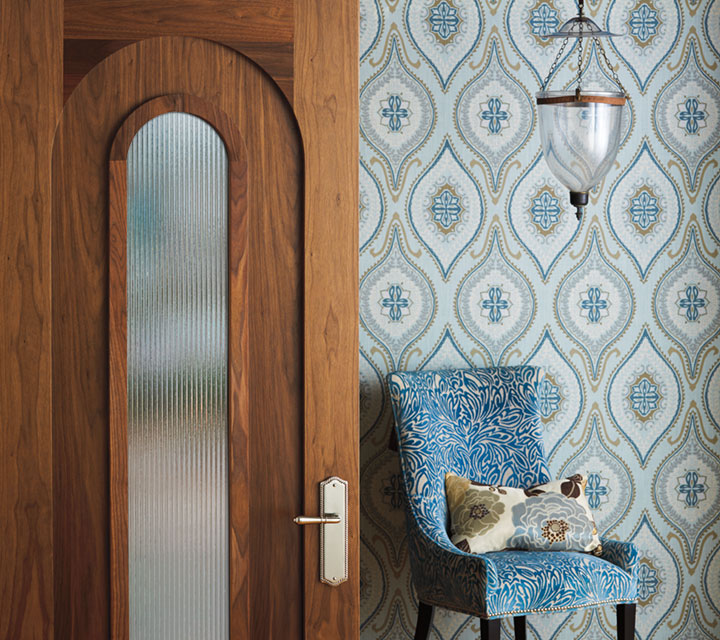
Inspired by the manor homes and country estates of 16th and 17th century England and France, the Tudor Revival house was a sprawling, asymmetrical mansion featuring steeply pitched, gabled roofs, massive chimneys and decorative elements such as half-timbering applied to stucco or masonry walls. Renaissance detailing is found within the Tudor style in its complex masonry and stone patterns, decorative chimney pots, arched doorways and entry porches.

The Tudor style became popular across the American architectural landscape during the 1920s and 1930s, including its stylistic application to smaller, more affordable homes that appeared during this time. The Tudor style disappeared again until a slightly modified application reappeared in the 1970s and 1980s, and has continued to inspire periodic interest.

Sources/Credits:

The architectural and historical information found in TruStile’s Authentic Designs section was compiled by TruStile research using the following resources:

  1. Carley, Rachel. 1994. The Visual Dictionary of American Domestic Architecture.
    New York: Henry Holt and Co. c Roundtable Press, Inc.
    ISBN 0-8050-4563-5
  2. McAlester, V. and Mcalester L. 1984. A Field Guide to American Houses.
    New York: Alfred A. Knopf. c Randomhouse.
    ISBN 0-394-73969-8
  3. Blumenson, John J.-G. 1977, 1981. Identifying American Architecture.
    New York: W. W. Norton & Company, Inc.
    ISBN 0-393-30610-0
  4. Hull, Brent. 2003. Historic Millwork.
    New Jersey: John Wiley & Sons, Inc.
    ISBN 0-471-41622-3
  5. Walker, Lester. 1981. American Homes.
    New York: Black Dog & Leventhal.
    ISBN 1-57912-252-3