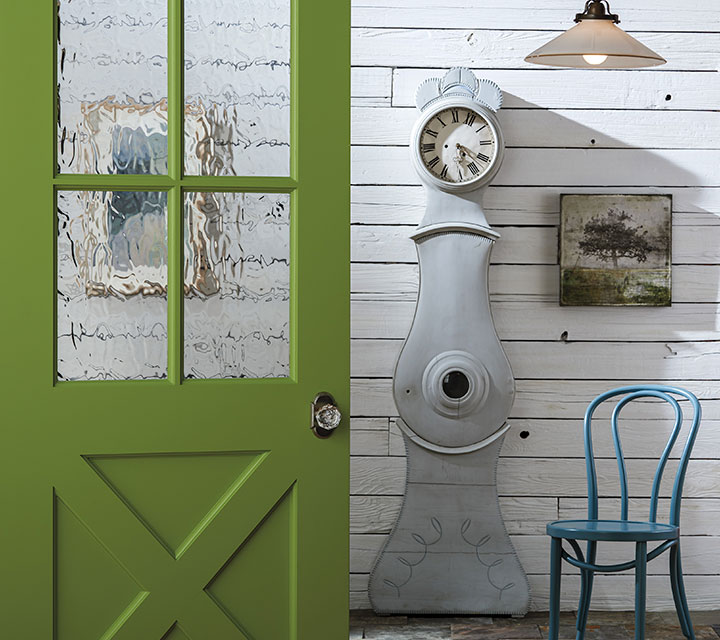
About the Farmhouse Style
Did you know?
American Farmhouse architecture is a hybrid of varying architectural histories brought to life by regional craftsmen and the building traditions of their time. This diversity in style, craft and character represents America’s history of immigration and pioneering spirit. Early settlers brought new architectural beginnings from old world cultures and spread East Coast building traditions to the west. Pennsylvania Dutch, Cape Cod, New England Salt Box, Colonial Hall and Parlour, German Stone, Greek Revival, Tidewater Plantation, Creole Cottage, Southern Piedmont and Southern Plantation are all examples of the wide variety of American Farmhouse architecture that punctuates our national landscape.
Farmhouse architecture is perhaps most recognizable by its core design elements. Covered porches, dormer windows and white paint are universal Farmhouse features. Heavy stone and timber were predominant in regions where these natural materials were readily available. Classic forms and details from the Greek Revival, Georgian and Victorian architectural eras were all incorporated into Farmhouse architecture. These design elements, however, were simplified to accommodate more modest means, while demonstrating the owner’s desire to show timely architectural conventions and fashionable taste.
American Farmhouse architecture embodied the need for basic comfort and was both practical and pleasant in its design. These sturdy and well-crafted homes were built to last. Formal spaces were generally positioned at the front of the house, while spaces for daily chores were placed at the back. These family homesteads often began very modest in size and scale, evolving into larger, more sprawling footprints as families grew and wealth increased. Random outcroppings and wing-like additions are indicative of the historic transformations these homesteads experienced over time.
American Farmhouse architecture is experiencing increased interest among new homebuilders and home renovators, alike. The nostalgia of returning to an earlier time and the appeal of a simpler, land-connected lifestyle are central to its renewed popularity. For some, the American Farmhouse is perhaps the most tangible and sentimental connection to our country’s rich history. It is an authentic, accessible and decidedly-American artifact evolving from image to icon, and holding a special place in our nation’s architectural history.